
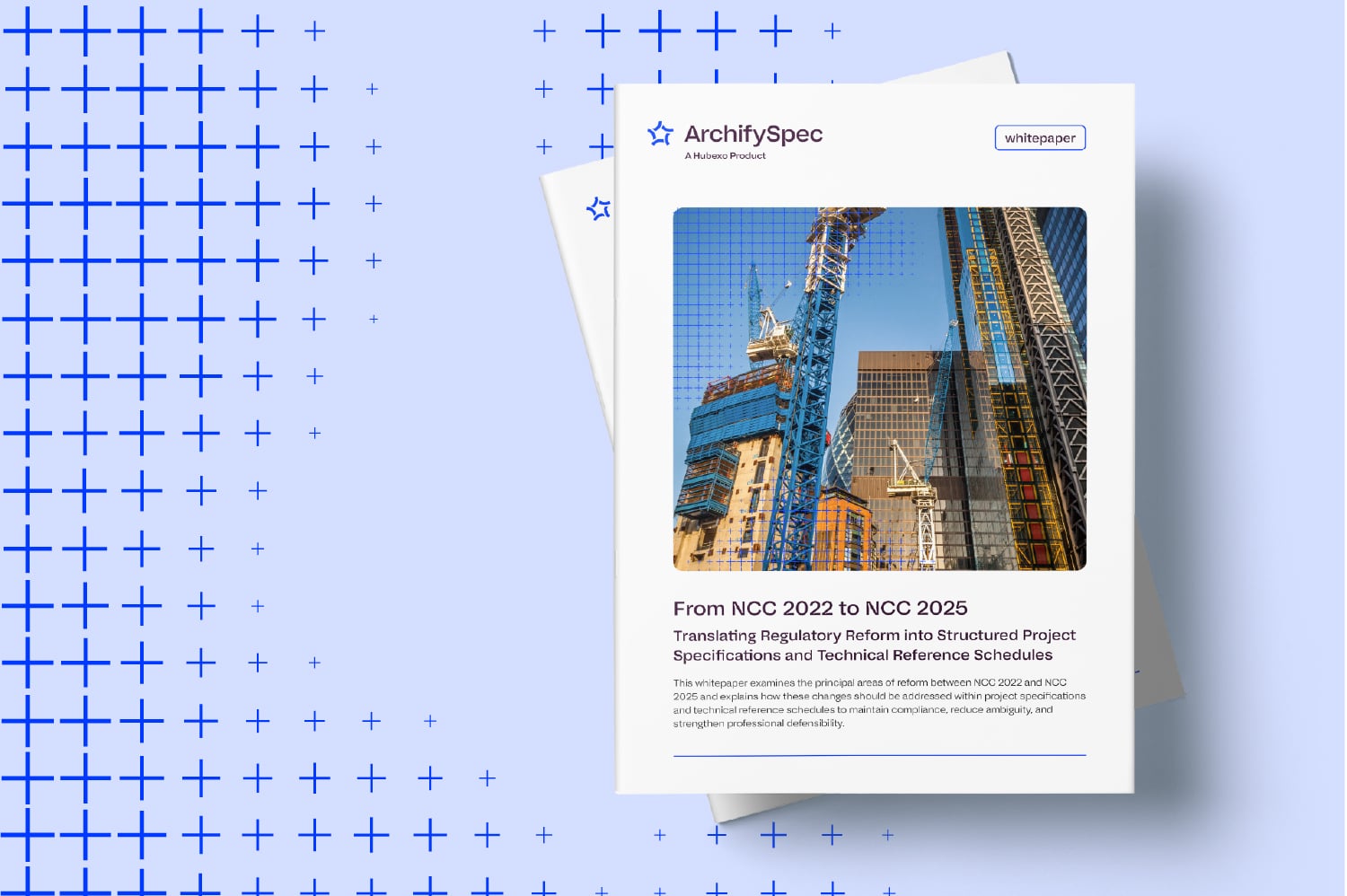
The transition from NCC 2022 to NCC 2025 represents more than a routine update to Australia’s building regulations. It reflects a broader shift toward measurable performance, traceable compliance, and stronger documentation requirements across the construction industry.
For building product manufacturers and suppliers, this shift carries important implications. Architects, specification consultants, and certifiers are increasingly required to demonstrate how selected materials and systems comply with the National Construction Code.
As a result, the quality and accessibility of product information are becoming more critical than ever.
Compliance Is Becoming Evidence-Driven
The NCC has progressively evolved toward a performance-based framework, where compliance must be supported by measurable outcomes and documented evidence rather than general statements.
Design teams can no longer rely on vague specification language such as “comply with NCC requirements.” Instead, they must clearly identify:
- The relevant NCC performance requirements
- The chosen compliance pathway
- The evidence demonstrating product suitability
For suppliers, this means providing clear, structured technical documentation that supports the specification process.
Products that are supported by verified testing, certifications, and transparent performance data are significantly easier for specifiers to include in project documentation.

Energy Efficiency Is Driving Material Selection
Energy performance remains one of the most significant areas of regulatory reform.
NCC 2025 continues to strengthen requirements around building envelope performance, services efficiency, and whole-of-building energy modelling.
This means design teams increasingly require detailed product data to support modelling assumptions, including:
- Thermal performance values
- Glazing performance data
- Insulation characteristics
- System performance within wall and roof assemblies
Suppliers that provide clear and verifiable performance metrics help ensure their products can be confidently incorporated into energy modelling and project specifications.
Building Envelope Performance Is Under Greater
Scrutiny
Condensation management has become an increasingly important consideration in Australian construction.
NCC reforms have introduced clearer requirements around moisture control and building envelope performance, particularly in climate zones where condensation risk is higher.
Rather than specifying materials individually, designers are now expected to consider the performance of entire wall and roof assemblies.
For product suppliers, this highlights the value of providing:
- Vapour permeability data
- Installation guidance
- System compatibility information
- Supporting modelling or validation where relevant
Products that are supported by system-level documentation are easier for consultants to specify with confidence.

Fire Compliance Remains a Major Focus
Fire safety continues to be one of the most closely scrutinised areas of building regulation.
Following international and local reforms, NCC 2025 reinforces requirements around combustibility, fire testing, and documented evidence of performance.
Design teams increasingly require clear evidence including:
- Fire test results (such as AS 1530 series testing)
- Fire resistance levels
- Compliance documentation supporting external wall systems
Manufacturers who maintain clear and accessible fire performance documentation reduce compliance uncertainty and simplify the specification process.
Accessibility and Livable Housing Requirements
Another important regulatory development is the introduction of livable housing provisions, which influence the design of residential buildings.
These provisions affect areas such as circulation spaces, door widths, access requirements, and sanitary facilities.
For suppliers, this may influence product dimensions, hardware selections, and installation requirements. Providing guidance on how products support accessibility and livable housing standards can assist design teams during specification.
Environmental Conditions Must Be Considered
Australia’s diverse climate conditions mean buildings must respond to a wide range of environmental exposures.
NCC 2025 reinforces the importance of considering factors such as:
- Bushfire exposure
- Cyclonic wind regions
- Coastal corrosion
- Flood risk and site conditions
For manufacturers, referencing environmental suitability within product documentation helps specifiers determine whether a product is appropriate for a particular project context.
Why Product Evidence Matters More Than Ever
One of the most significant trends across the construction industry is the growing emphasis on evidence of suitability and product traceability.
Specifiers must increasingly demonstrate that products meet the relevant standards and regulatory requirements.
This may include documentation such as:
- CodeMark certification
- Accredited testing reports
- Manufacturer technical declarations
- Compliance statements referencing current standards
Products supported by transparent and accessible documentation are far easier for designers to incorporate into specifications.
Supporting Specifiers in a Changing Regulatory
Environment
As the regulatory environment evolves, the role of product suppliers is also changing.
Manufacturers are no longer just providing materials — they are increasingly providing technical evidence that enables and supports compliance and specification decisions.
Suppliers who make this information clear, structured, and easy for specifiers to access are better positioned to support design teams and increase specification opportunities.
Platforms like Archify help bridge this gap by making product information, technical documentation, and BIM content accessible where architects and specifiers are actively searching.
In an industry where documentation and compliance are becoming central to project delivery, visibility and accessible product information can make a meaningful difference.